






Sadiq Khan, as chair of TfL, has been called on to put together a plan to end violence against women and girls on London’s public transport network
Transport for London have been told to use their blueprint to eliminate all deaths on the capital’s roads in their crackdown on violence against women and girls (VAWG) on public transport. Vision Zero is a strategy rolled out by the Mayor of London in 2018 that aims to eradicate all deaths and serious injuries from the transport network.
This includes target actions, interim success measures and key performance indicators (KPIs) to track progress. Campaigners have now called on Sir Sadiq Khan, the chair of TfL, to implement a similar plan when it comes to tackling violence and harassment of women and girls on London’s Tubes and buses.
According to data obtained by the London Assembly, between 2022/23 and 2024/25, sexual offences against women and girls increased significantly on the Elizabeth line – by 247.8 per cent in 2023/24 and another 17.5 per cent in 2024/25, the Underground, from 745 in 2022/23 to 856 in 2024/25, and the bus network, which saw a 28.6 per cent in 2024/25.
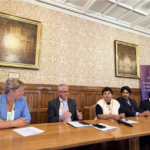
Susan Leadbetter, Transport Consultant and Specialist in Gender Sensitive Design at WSP, told the London Assembly on Wednesday (December 3) that the transport body was currently missing a “cohesive strategy” on VAWG.
“If we look at road safety, we have Vision Zero, and Vision Zero is all about eliminating killed and seriously injured from collisions – I would love to see something like that for violence against women and girls and setting KPIs so we actually have something to measure against,” she said.
“Why the Vision Zero approach is so good, is that it looks at that systems approach. I think there’s lots of different strategies out there, but at the minute they’re quite disjointed. So I think it’s just bringing those together in one sort of cohesive strategy. I wouldn’t say that one strategy is better than another.
“For example, I think the documents that are out there out there that exist are are good, but they just don’t go far enough. Bringing in that systems thinking of the culture, the design, the engagement and the policies, and again having something to measure against, that is why I think those KPIs are really important.”
Tricia Hayes, who chairs transport watchdog London TravelWatch, said TfL did not currently have a “single, definitive integrated set of data that gives a clear picture” around VAWG on the network.
“Lots of different organisations are not all working to a common standard, which makes it very difficult to compare and contrast what’s going on either across different transport operators or across different geographies.”
It was also pointed out that the British Transport Police (BTP) don’t operate on buses, creating a further data gap. Panellists speaking to the London Assembly Police and Crime Committee noted that poor handling of reporting incidents on public transport had undermined confidence in the authorities to deal with the issue, resulting in fragmented and inaccurate data.
Ms Leadbetter said: “Based on the research that we did, we just found that women and girls just didn’t trust the process. They didn’t find that it was effective.
“Training was something that was coming up consistently, and going back to around not knowing what to report and how to report and just access to information was really key as well. TfL are doing lots of good work – there’s always definitely sort of room for improvement there.
This testimony is backed up by previous research from City Hall. The Out in London report shows that 21 per cent of LGBTQ+ passengers experienced hate crime on transport, yet 84 per cent of these incidents were not reported.
Meanwhile, a University of Manchester analysis found that sexual harassment is massively underreported nationally. While theft sees around 960 reports per month, sexual offences average just 116, but actual incidence estimates suggest closer to 683, indicating only 17 per cent are formally lodged.
Failing to identify and solve the underlying issues will simply mean women and girls stay away from public transport in London, Ms Hayes warned.
“There is a powerful business case for tackling VAWG on the TfL network – it is hugely in TfL’s interest, or it’s not going to meet its Mayoral targets for getting people onto its network,” she said.
“There’s no reason not to crack on with strategies to change behaviour, clearer reporting routes and improving the physical environment.”
TfL have indicated the rise in recorded offences is at least partly due to a rising confidence in reporting any incidents.
In response to an FOI request on VAWG last month, they said: “Tackling sexual harassment and improving customers’ confidence to travel is a priority for us and we are committed to playing our full part in delivering the Mayor’s strategy to end violence against women and girls (VAWG).
“Concerted action has already been undertaken for a number of years. In partnership with the Rail Delivery Group (RDG), British Transport Police (BTP), Metropolitan Police Service (MPS) and women’s safety groups we launched a campaign to highlight our zero tolerance approach to all forms of sexual harassment and sexual violence on the transport network in October 2021.
“The campaign highlights various forms of unwanted sexual behaviour that can take place on public transport and aims to send a strong message to offenders that sexual harassment and sexual assault is not tolerated on TfL’s services, and the importance of reporting incidents of this nature.
“Since the launch of the campaign, we have seen an increase in reports of sexual offences in part due to confidence that action will be taken.
“These offences have been underreported in previous years, with October 2021 seeing the highest number of reported offences since before the pandemic, and these increased levels of reporting have been sustained.”
Sign up for our London Underground newsletter for the latest travel updates to make your commute easier, plus a weekly fix of Tube trivia! Sign up HERE.